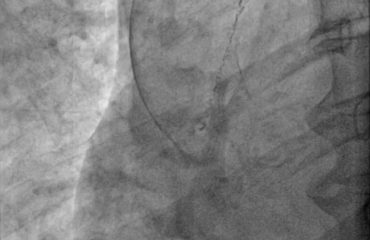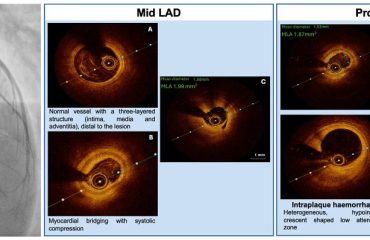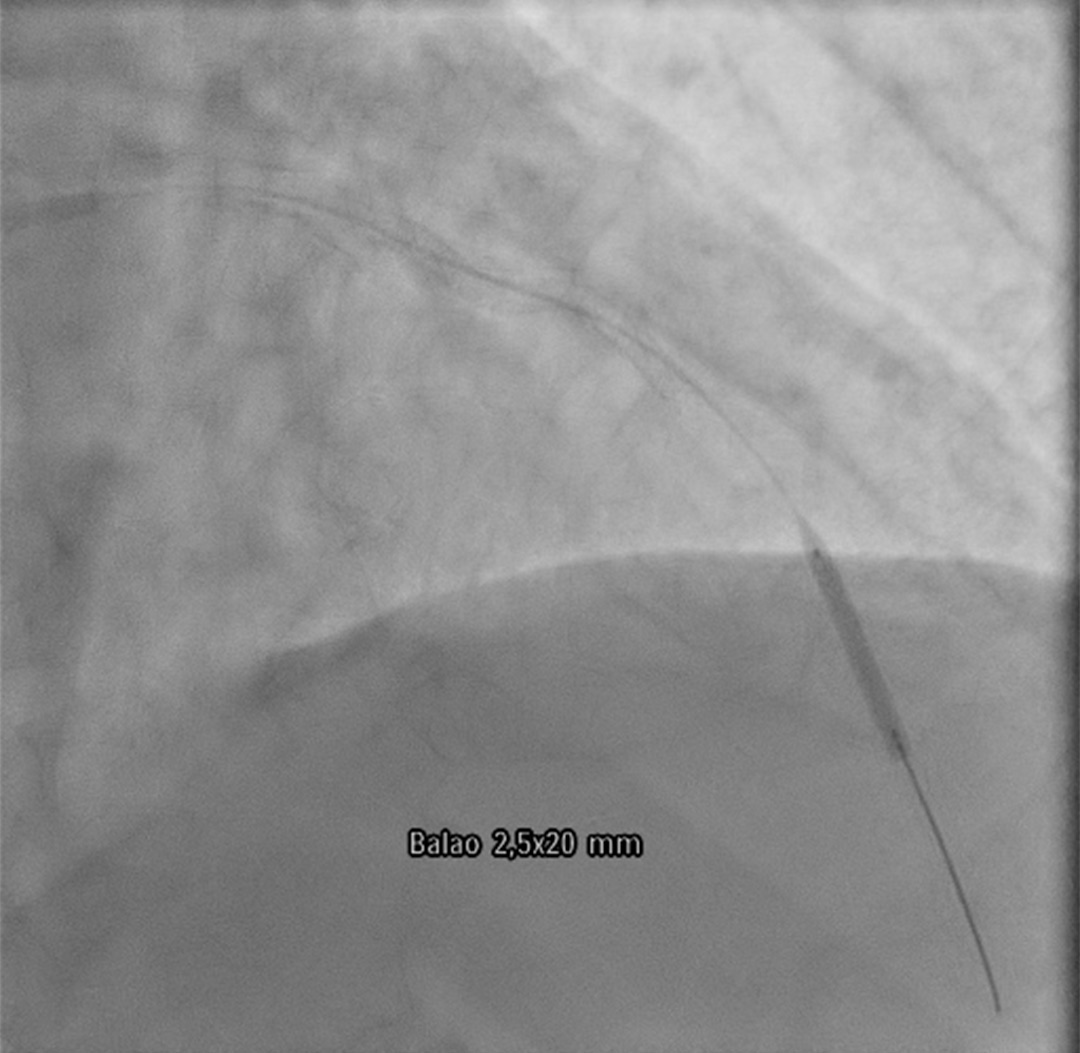
Descrição do caso: A 64-year-old man was brought to the Emergency Department with retrosternal chest pain lasting 8 hours. A pre-hospital ECG showed an anterior STEMI. Regarding his past medical history, the patient had been discharged from the Cardiology Department 5 days earlier, where he had been admitted for SCAI C cardiogenic shock. At that time, he presented with severe left ventricular systolic dysfunction (LVEF 23%) of multifactorial etiology, including alcoholic and ischemic cardiomyopathy. He underwent percutaneous coronary intervention of a 75% mid-left anterior descending artery lesion with implantation of a 3.5 × 38 mm drug-eluting stent using the buddy-wire technique. The patient reported complete non-adherence to the prescribed discharge medication following hospital discharge. Repeat coronary angiography demonstrated subacute thrombosis of the previously implanted stent. Multiple dilatations were performed using a 3.0 × 12 mm non-compliant balloon. An intravenous bolus of eptifibatide was administered, followed by passage of an Eliminate aspiration catheter, without retrieval of thrombotic material. Prolonged balloon dilatation with a 2.5 × 20 mm balloon was subsequently performed in the mid and distal segments, achieving vessel recanalization. Despite the presence of a large thrombotic burden, final distal flow was TIMI 3. The patient was discharge 6 days later with no another complications. This case highlights the challenges associated with high thrombotic burden lesions encountered in subacute stent thrombosis, a condition with high mortality rates that, in this case, could potentially have been avoided through therapeutic compliance
Autores: Mariana Rodrigues Simões, Ana Luísa Silva, Joana Delgado Silva
Centro de Origem: Serviço de Cardiologia, ULS de Coimbra
Video 1: Subacute thrombosis of the previously implanted stent in the mid-left anterior descending artery lesion
Video 2: Result after dilatation using a 3.0 × 12 mm non-compliant balloon and passage of an Eliminate aspiration catheter
Imagem: Prolonged balloon dilatation with a 2.5 × 20 mm balloon in the mid and distal segments
Final result